

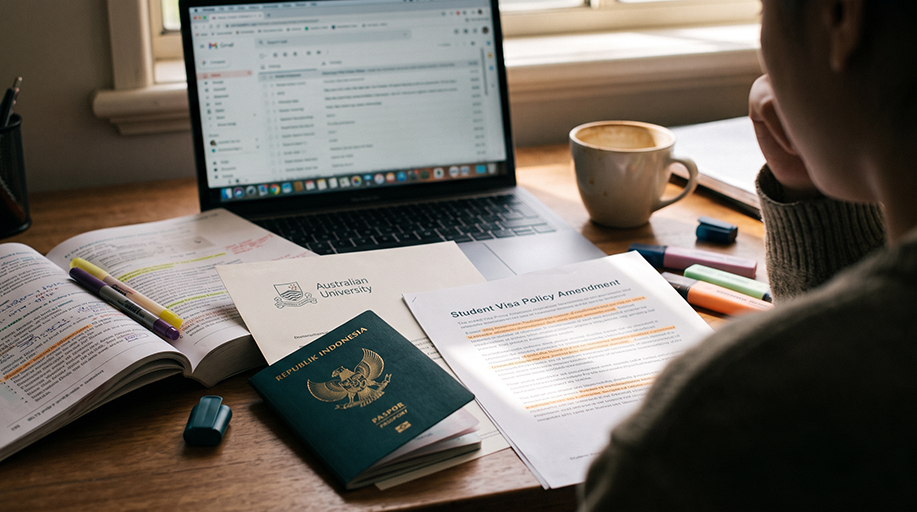
The Australian government has implemented significant changes to the Subclass 500 student visa and Subclass 590 Student Guardian visa, effective from October 2, 2026. These changes specifically affect students' ability to apply for a visa while in Australia (onshore) and the rules regarding the inclusion of family dependents in visa applications. The primary goal is to strengthen the integrity of the student visa program and ensure that these visas are used for their main purpose, which is temporary study in Australia.
Restrictions on Student Visa Applications in Australia (Onshore)
One of the most striking changes is the strict restriction on who can apply for a student visa or Student Guardian visa while in Australia. From October 2, 2026, most temporary visa holders will no longer be able to apply for a new student visa from within Australia.
Who Cannot Apply Onshore?
Other Temporary Visa Holders: Most temporary visa holders in Australia, including Working Holiday Maker visa holders (Subclass 417 and 462) and Skills in Demand (Subclass 482) visa holders, cannot apply for a student or Student Guardian visa while in Australia.
Student Visa Holders Who Want to Extend/Change: If you currently hold a student visa and wish to apply for another student visa (e.g., to pursue higher education or change programs), you generally must apply from outside Australia. This also applies to dependents who hold a student visa and wish to become the primary applicant.
Must Be Outside Australia During Application and Visa Grant: If you cannot apply from within Australia, you must be outside Australia when submitting your student visa application and also when the visa is granted.
The Australian Department of Home Affairs explicitly states that applications lodged from within Australia under ineligible conditions will not be considered valid.
Exceptions for Onshore Applications
Despite strict restrictions, some categories of students are still eligible to apply for a new student visa from within Australia. These exceptions apply if you:
Are sponsored by the Australian Department of Foreign Affairs and Trade (DFAT) or the Australian Department of Defence.
Are applying to undertake a doctoral program (PhD).
Are applying for primary or secondary school studies.
Require an additional period of up to 12 months to complete your primary course with the same education provider.
Have completed the primary course covered by your current visa and are progressing to a higher qualification level within the Australian Qualifications Framework (AQF).
Your education provider can no longer deliver your course of study (provider default).
Changes to Rules for Family Dependents
Another significant change relates to the ability to include family members (spouse or children) in a student visa application or add them after the visa is granted. From October 2, 2026, the rules will become much stricter.
Who Cannot Bring Family Members?
Most new student visa applicants generally can no longer include dependent spouses or children in their applications.
Exceptions for Family Dependents
Limited exceptions apply to some groups of students who can still include their family members:
Doctoral program (PhD) students.
Students sponsored by the Australian Department of Foreign Affairs and Trade (DFAT) or the Australian Department of Defence.
Recipients of foreign government scholarships.
Eligible students from Pacific or ASEAN member countries.
No Addition of Family Members After Visa Grant
It is important to note that for current student visa holders, there is no longer an option to add family members (such as spouses or children) as subsequent entrants after your primary student visa is granted. The Australian Department of Home Affairs does not provide exceptions to this rule.
Latest Financial Requirements
In addition to changes in application rules and family dependents, the financial capacity requirements for Australia student visas have also been updated. As of October 17, 2026, the living cost benchmark for a single student is AUD 29,710. This amount must be added to tuition fees and travel costs.
Annual Living Costs: For a single student, the living cost benchmark is AUD 29,710.
Tuition Fees: You must demonstrate proof of sufficient funds to cover your first year's tuition fees.
Travel Costs: Funds for round-trip travel to Australia must also be accounted for, with an estimate between AUD 1,000 to AUD 2,500 depending on your location.
Alternative Annual Income: Alternatively, you can demonstrate that your parents or spouse have a minimum annual income of AUD 87,856.
You need to ensure that you have genuine access to these funds. The Department of Home Affairs will consider the sponsor's employment history and unusual financial patterns. It is also important to note that the primary Subclass 500 student visa application fee is AUD 2,500, effective from July 1, 2026.
Purpose Behind These Changes
The Australian government states that these changes aim to strengthen the integrity of the student visa program. The goal is to reduce the misuse of the student visa program, particularly "visa hopping" where individuals move from one temporary visa to another to extend their stay in Australia without a clear study purpose. These changes are designed to ensure that student visas are used by genuine students who come to Australia for educational purposes.
Other Important Points
Does Not Affect Current Visas: If you already hold an Australian student visa, your current visa will not be affected by these changes.
Applications Before October 2, 2026: Applications lodged before October 2, 2026, will be assessed under the rules applicable at the time of application.
Education Provider Changes: Rules have also been tightened for changing education providers, where non-school students are now generally restricted from changing providers during the first 12 months of their primary course, effective until June 30, 2027.
Given the rapid changes and complex details, it is crucial for you to always verify the latest information on the official website of the Australian Department of Home Affairs or consult with a migration expert. Fee amounts and rules are subject to change at any time.
These changes to Australian student visa rules will certainly raise many questions and may affect your study plans. To get personalized guidance tailored to your specific situation, the Fortrust Education Services team of education consultants is ready to assist. Do not hesitate to contact us for the information and support you need to achieve your study dreams in Australia.